
March 10, 2026
Lake Forest College
Human connections in a machine age: Why networking in college matters more than ever
AI can write resumes, optimize LinkedIn profiles, and even simulate interviews, but there is one thing it cannot replace: human relationships.
With the boom of artificial intelligence (AI) in recent years, students, graduates, parents, and universities have often found themselves scrambling to understand a rapidly shifting landscape of entry-level jobs.
Now, networking during college is more critical than ever. Beyond landing a first job, strong relationships provide adaptability, mentorship, and access to opportunities that algorithms alone cannot deliver.
At Lake Forest College, a strong culture of connection supported by the Gorter Family Career Advancement Center (CAC) is helping students stand out in a world increasingly shaped by automation.
How are education and the career landscape changing with AI?
AI is automating technical and routine tasks across industries. From drafting reports to analyzing data, many entry-level responsibilities are now supported or partially replaced by technology. As a result, the skill sets required for early-career roles are changing.
In recent years, the hiring process itself has become more automated. Applicant tracking systems screen resumes, AI tools evaluate applications, and digital platforms widen the candidate pool. Students are no longer competing only with peers in their geographic area; they are competing with applicants from around the world.
As a result, employers are placing greater emphasis on human skills such as adaptability, critical thinking, and interpersonal communication. Networking is a key part of providing graduates a personal advantage in the job search, but it requires intentional effort and connection on all sides.
How does networking help students stand out in the job market?
Networking opens doors to opportunities that often emerge through conversations, internships, research collaborations, startup partnerships, or direct outreach.
While algorithms can filter resumes and rank candidates, people still make final hiring decisions. And people hire people they trust. Referrals and recommendations often carry more weight than a perfectly optimized application because they reduce uncertainty in the hiring process.

Did you know that 80 percent of jobs are not advertised? Now more than ever, most people find opportunities by speaking to people in their personal network: family, friends, and professional contacts. Students who build strong relationships gain early access to emerging industries and projects—sometimes even before they appear on job boards.
Just as importantly, networking highlights a student’s human skills. Communication, empathy, leadership, and collaboration are increasingly valuable in the workplace. As technology handles more technical tasks, employers are looking for individuals who can work effectively on teams, navigate ambiguity, and build meaningful relationships. Relationship-building itself becomes a uniquely human differentiator.
“In today’s competitive job market, networking is more crucial than ever—with some reports showing that up to 85 percent of jobs are filled through connections,” said Colleen Monks, Associate Vice President for Career Advancement. “Our programs center on helping students move beyond AI‑driven screening and applicant‑tracking systems by building meaningful relationships within our close‑knit Forester Network. We focus on what technology can’t replace: genuine human connection, visibility with recruiters and alumni, and a clear, compelling narrative about your strengths.”
How is Lake Forest College helping students network?
At Lake Forest College, networking is not left to chance. The Gorter Family Career Advancement Center organizes key events throughout the semester designed to connect students with employers, alumni, and industry professionals.
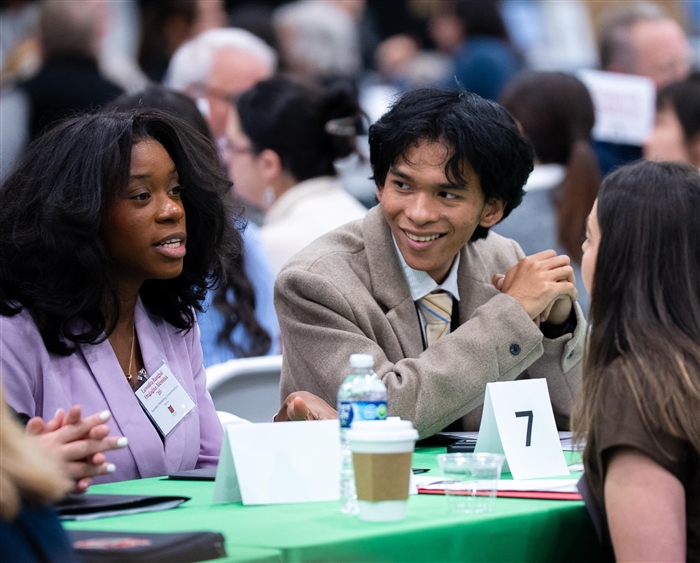
Large keystone networking events such as the annual Speed Networking event in the fall give students the opportunity to practice turning a brief introduction into a meaningful first impression while meeting multiple professionals in a short amount of time. The Lake Forest College In The Loop Mixer creates space for informal conversations among students, alumni, and recruiters at an evening downtown, helping relationships develop organically in the heart of Chicago.
February is Career Month
During Career Month at Lake Forest College, networking efforts intensify as students gear up for summer internships and post-graduation roles. Throughout February, they participate in workshops, professional panels, networking events, and skill-building sessions focused on career exploration, interview preparation, and professional development. These programs provide structured, accessible opportunities for students at every stage of the career-building process to develop their personal brand and build their network.
Career Month kicks off the spring’s Career Pathway-specific events that help students deep-dive into their areas of interest.
The Business, Finance, and Data Science Employer Showcase brings a diverse range of hiring organizations to campus, allowing students to ask questions, and build connections while exploring industries like marketing, investment banking, and information technology.

At Careers in Health Care and Research, students hear from a panel of healthcare providers and researchers about how to succeed in the field; then they engage with professionals in small-group networking. Later in the semester, Discover Your Mission: Careers in Nonprofits and Service connects students with professionals in roles that can make a difference in the community.
GO Networking Program
The GO Networking initiative helps students take advantage of Lake Forest College’s unique proximity to premier networking opportunities to build connections. Students of all majors and class years can participate to develop conversational skills, learn about new fields, and meet like-minded professionals.
Each student can apply for reimbursement for up to $150 per semester to cover costs of event registration and transportation (train/bus, rideshare, mileage reimbursement). Students can choose from the list of approved GO Networking events curated by their career advisor, or propose their own.
What are some common misconceptions about networking?
Despite its importance, networking is often misunderstood as fake or transactional. In reality, effective networking is rooted in curiosity and genuine interest. It is less about asking for a job and more about learning from others’ experiences and building authentic relationships over time.
Others assume that only extroverts are good at networking. However, thoughtful questions, active listening, and meaningful one-on-one conversations are often more impactful than large, high-energy interactions.

College is a time to build professional skills, and many students understand that their academic work prepares them for careers and graduate study. But skills are only one piece of the puzzle. Relationships help demonstrate and advocate for those skills, ensuring they are recognized and valued.
When reframed as relationship-building rather than self-promotion, networking becomes less intimidating and more purposeful.
Student perspective: Making connections to make a career
Ian Villardi '26, an incoming Analyst at Goldman Sachs, received a full-time return offer after working as a 2025 Summer Analyst on the same team. Here's how he leveraged networking to secure a job before graduation.
Early in the fall of his first year, Villardi reached out to an alumnus on the team with a similar background, which allowed him to establish a relationship early on. That spring, he met a VP from the same group at the on-campus Employer Showcase. He followed up consistently, staying in touch over the next two years while expanding his connections across the team. By sophomore spring, when recruiting opened for junior summer internships, Villardi had spoken with multiple professionals in the group and received a referral to apply.
Networking was not the only factor that led to his selection for the interview process, but it also gave him a strong context and understanding about the team when interviewing. The interpersonal relationships with professionals in the group and clear understanding of their work were Villardi's main competitive advantages against the many qualified candidates.
Villardi currently serves as a member of a Career Pathway Leadership Team for the College, now helping to provide input on student career preparation and help other Foresters achieve the same networking success.

“
Networking was the primary factor that enabled me to complete four finance internships during college and ultimately secure a full-time offer. As an international student with no prior connections in the United States or in finance, approaching networking intentionally allowed me to bridge that initial gap.
Ian Villardi '26, inncoming Analyst at Goldman Sachs starting in July 2026
What other ways can students network?
Networking can start in everyday campus life, beginning in the classroom. Classmates may become future colleagues, collaborators, or business partners. Professors can serve as mentors, references, and connectors to research or industry opportunities. Attending office hours intentionally can turn a brief interaction into a lasting mentorship.
Student involvement is also a key way to build community on campus. Not only do clubs and orgs pave the way for lasting friendships, they also allow students to develop leadership skills and form deeper connections around shared interests. These communities often introduce students to alumni and guest speakers who expand their professional circles.
Connecting with alumni is another powerful step. Most alumni are eager to share advice and insights with current students. The Forester Network is an involved and active community of over 400 local and global professionals across a range of industries.
Beyond events, career advisors coach students to tap into this powerful community, especially through LinkedIn. This includes regularly encouraging students to connect with alumni for career exploration informational interviews, and to “network in” every time they apply for an internship or job by connecting with alumni who work at the organization.
The College also offers a Foresters CAREER Mentoring Program that connects students with mentors in their industry, major, or geographic area of interest. In winter 2025-26 alone, over 200 professionals signed up to give student mentees advice and networking referrals.
The direct connections student make with the Forester Network contributes directly to the College's impressive job placement rate: 97 percent of the Class of 2025 secured a career or graduate placement within six months of graduation.
The result: human skills are more important than ever
Artificial intelligence will continue to transform how we learn, work, and apply for jobs, but as technology grows more powerful, human connection grows more valuable.
At Lake Forest College, students are learning that career preparation is not just about mastering tools—it is about building relationships. Through intentional programming, campus engagement, and a culture of connection, the College is helping students cultivate the one advantage AI cannot replicate: the ability to form communities of support, be it in learning or the job market.