

January 28, 2026
Linda Blaser
How the brain judges faces: Volwiler Lecture on February 10
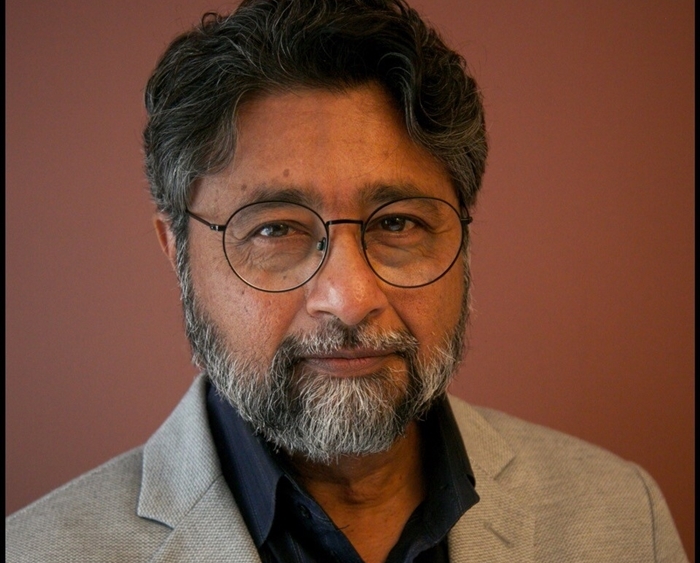
Beauty moves us instantly—often before we are aware of it. From a single glance at a face, our brains generate rapid judgments that shape how we feel, think, and behave toward others.
In “The Neuroscience and Ethics of Beauty and Human Appearance,” Anjan Chatterjee, MD, will examine the neuroscience of beauty, revealing how automatic neural responses give rise to powerful biases such as the “beauty-is-good” stereotype and the stigmatization of facial differences. By exploring the intersection of biology and culture, this talk challenges us to reconsider how aesthetic judgments influence moral perception—and offers pathways toward reducing the unintended harm these biases can cause.
Anjan Chatterjee is a Professor of Neurology, Psychology, and Architecture and the founding director of the Penn Center for Neuroaesthetics. His research focuses on spatial cognition and its relationship to language. He also conducts neuroaesthetics research and writes about the ethical use of neuroscience findings in society.
He wrote The Aesthetic Brain and co-edited Brain, Beauty, and Art, Neuroethics in Practice, and The Roots of Cognitive Neuroscience. He is or has served on editorial boards of several neuroscience, neurology, ethics, and aesthetics journals. He received the Norman Geschwind Prize in Behavioral and Cognitive Neurology from the American Academy of Neurology, the Rudolph Arnheim Prize for contributions to Psychology and the Arts from the American Psychological Association, the Leadership in Innovation Award from the Global Wellness Institute, The Big Sea Award for the Promotion of Aesthetic Beauty from the Mediterranean Tourism Forum, and the Lawrence Foreman Award from Haverford College.
“[Dr. Chatterjee] has brought together medicine, science, and humanities in a unique way with his scholarship and is widely regarded as a thought leader.”
He was Chair of Neurology at Pennsylvania Hospital, a founding member of the Board of Governors of the Neuroethics Society, the past President of the International Association of Empirical Aesthetics, and the Behavioral/Cognitive Neurology Society. He serves on the boards of the Global Wellness Institute and The College of Physicians of Philadelphia, and previously Haverford College, and Associated Services for the Blind and Visually Impaired.
Supported by the Ernest H. Volwiler Fund, this lecture provides the Lake Forest College community with an opportunity to hear from a variety of noteworthy pioneers and advocates of the sciences. This year’s lecture is presented in partnership with the Krebs Center for the Humanities, The Ethics Center, and Synapse—Lake Forest College’s neuroscience student organization.
“I am beyond thrilled that Dr. Chatterjee will be our Volwiler lecturer. We have tried to get him for years to give a major talk at the college. As a neurologist leader, he has brought together medicine, science, and humanities in a unique way with his scholarship and he is widely regarded as a thought leader and both advocate and critic in two emerging important interdisciplinary fields, neuroethics and neuroaesthetics,” DebBurman said.
“His interdisciplinary talk that connects brain, beauty, and art should widely appeal to our college community and the broader public. He combines neuroimaging and studies with patients with neurological disease to probe cognitive systems. His research has provided insights into our actions, spatial and causal relations, and particularly how art is affected by brain damage. In fact, he coined the term ‘cosmetic neurology’ to define how the abilities of healthy people can be enhanced with insights from clinical neuroscience and the ethical issues that follow from this practice.”
31st Ernest H. Volwiler Distinguished Scientist Lectureship
5 to 6:15 p.m., February 10
Public reception at 4:30 p.m.
Middle Campus, Brown Hall
This event is free and open to the public.
Who was Ernest Volwiler and what was his connection to Lake Forest College?
Ernest Henry Volwiler (August 22, 1893 – October 3, 1992) was an American chemist.
Recruited by Wallace C. Abbott, Volwiler joined Abbott Laboratories as a research chemist in 1918. Volwiler became Chief Chemist in 1920 and Director of Research in 1930. From 1933 to 1946, he acted as Vice President of Research and Development. From 1946 to 1950, he became Executive Vice President of Abbott Laboratories, and from 1950 to 1958, President and General Manager. In 1958, he became Chairman of the Board, retiring in 1961.
At Lake Forest College, where he was a member of the Board of Trustees, he established the Ernest H. Volwiler Distinguished Scientist Lectureship and the Ernest H. Volwiler Chair in Natural Sciences and Mathematics.