
February 05, 2026
Linda Blaser
Students turn concern into action with new neuroscience literacy event
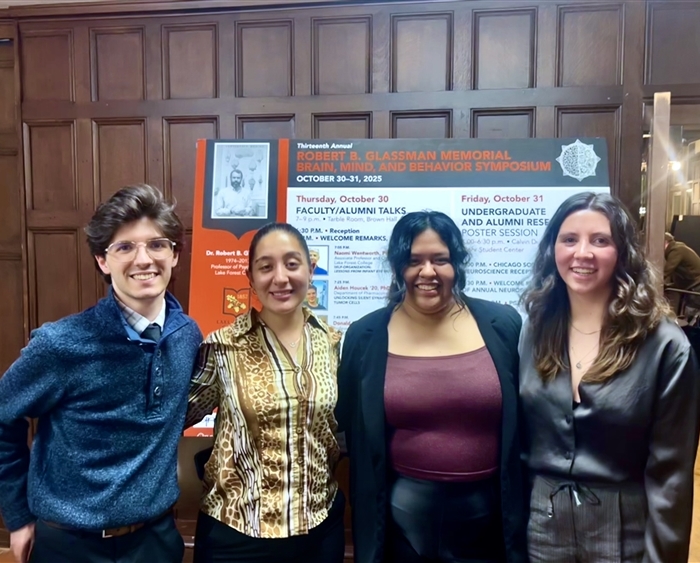
What began as a conversation between students last fall has grown into a funded neuroscience literacy event this spring.
The students’ concerns were twofold: how to dispel myths about neuroscience wrongly perpetuated by the increasing popularity of generative AI and overcome recent limits to science research funding.
In response to these challenges, the leaders of Nu Rho Psi and Synapse, two student neuroscience organizations, proposed the establishment of Neuroliteracy Week—an outreach initiative designed to address weaknesses in scientific communication through community-based activities.
Together with Assistant Professor of Psychology and Neuroscience Hannah Carlson, the four students—Leslie Casares ’26 and Gizem Ozturk ’26, co-presidents of Synapse, and Aaron Oster ’26 and Martha Alatorre Martinez ’26, co-presidents of Nu Rho Psi, wrote and submitted a grant proposal to the DANA Program For Neuroscience and Society at Loyola University Chicago. The proposal was accepted and the College was awarded a grant to host Neuroliteracy Week.
The inaugural theme this year, “This Is Your Brain on Fake News: Neuroscience Literacy in the Face of Misinformation and AI,” will anchor several themed days of programming across two weeks, engaging the Lake Forest community, students, faculty, and staff in active conversations about the brain, technology, and rebuilding trust in science.
Neuroliteracy Week lineup
- Think Before You Link: Monday, Feb. 9, 4–6 p.m. Tarble Room, Brown Hall
This event's guiding question: How do we know when X causes Y? The first hour will feature three mini-lectures from three faculty members across departments for an interdisciplinary discussion of causality. The second hour will feature an interactive activity.
- Neurons, Meet Algorithms: Wednesday, Feb. 11, 4-6 p.m. Room 044, Lillard Science Center
This event's guiding question: How do humans and machines learn and how might they learn from one another? The first hour will feature mini-lectures from two faculty members, who will discuss the core principles of human and machine learning. The second hour will feature an interactive game of Family Feud. Put your skills to the test and see if you can beat the bot!
- Funding the Future: Tuesday, Feb. 17, 4–6 p.m. McCormick Auditorium, Lillard Science Center
An interdisciplinary and interactive panel of speakers from Lake Forest College, Princeton University, and Rosalind Franklin University will discuss the basic process of funding, consider challenges to this process, and answer questions from audience members. - Science Fair for the Skeptical: Thursday, Feb. 19, 4–7 p.m. Calvin Durand Hall
This carnival-themed event will serve as a celebratory capstone of the Neuroliteracy Week. This final event will feature a group science fair volcano game and a Shark Tank-style game.
“
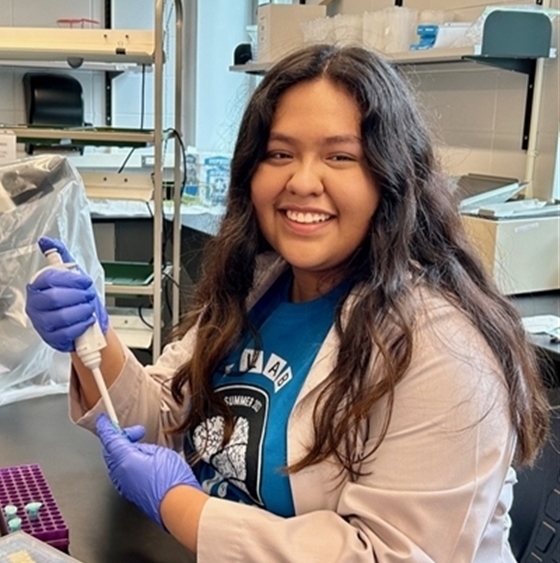
Not only have I gained the skills to write a grant, I also learned how to design a program with my colleagues and faculty members to project the main themes of our outreach for the public. I am delighted that our idea has now become an initiative that my peers, faculty members, and I are excited to contribute to. It gives me great hope that others will want to continue this event, even after I graduate.
Leslie Casares ’26
“
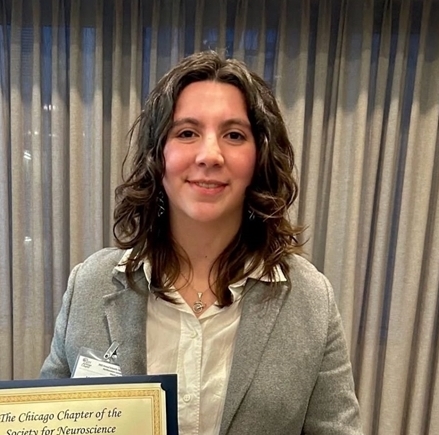
Outreach matters because neuroscience plays a role in everyone’s lives. Decisions about education, technology, and public policy are informed by neuroscience, and being scientifically literate allows people to critically evaluate and participate in those conversations. Initiatives like this help ensure that science is something the public can understand, influence, and guide as it continues to evolve.
Martha Alatorre Martinez ’26
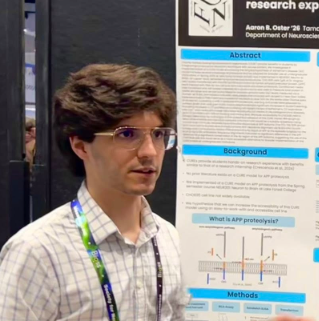
“
I am passionate about community outreach. As an aspiring neuroscientist, it is important to recognize that communication is one of the most essential components of science. As I move forward in my research career, I hope to take these skills of bridging scientists and the community to make myself a better scientist and scientific communicator so as many people as possible can benefit from all the new knowledge being created.
Aaron Oster ’26
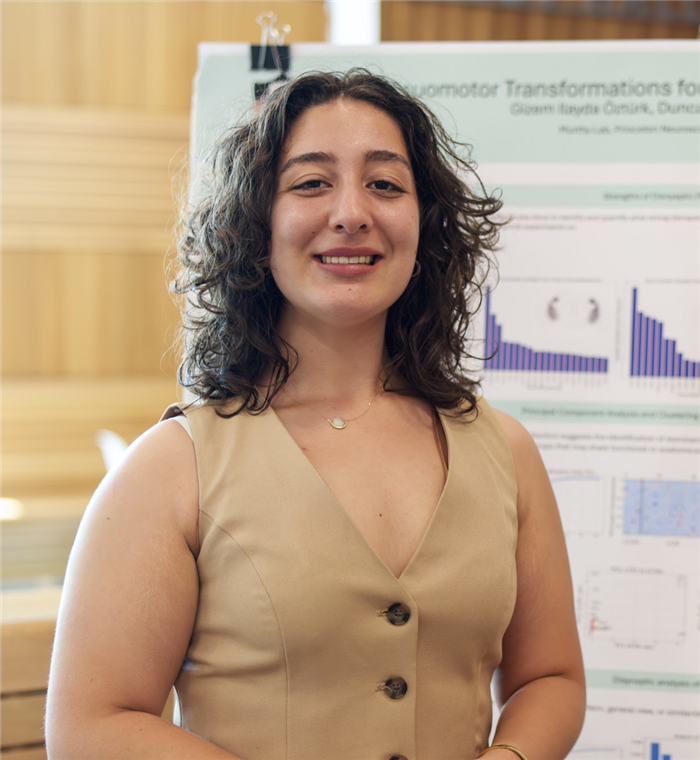
“
I hope to work in community advocative environments, and so this project helped with thinking about all different communities and how to make neuroliteracy accessible for all. This was my first time writing a grant proposal, and I really experienced the depth of research funding. It was a great experience.
Gizem Ozturk ’26