

Why study physics at Lake Forest College?
We believe responsible citizens strive to understand the fundamental concepts of physics in order to make wise decisions about science and society. The Department of Physics at Lake Forest College offers a wide range of courses and research opportunities for students interested in physics, electrical or mechanical engineering, health careers, teaching, and the arts. Our curriculum is designed to prepare students for graduate school in physics and engineering as well as employment in a variety of industries.
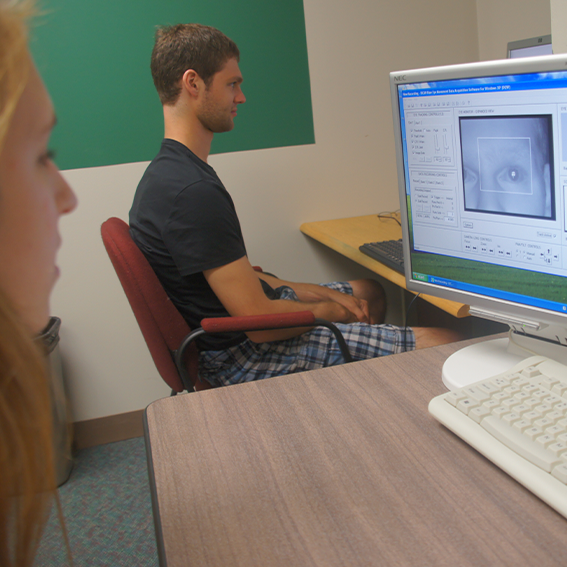
Our students benefit from small class sizes, one-on-one mentorship opportunities, and vigorous research that helps them learn to analyze data and build their own experiments. Our outstanding faculty provide attentive support for each student, and the department is proud of its history of excellence in teaching physics. Our physics faculty members study acoustic levitation, granular materials, industrial automation, quantum optics, and computational physics for surface processes; students can customize their learning through independent study.
Physics majors are problem solvers, equipped with inventive thinking and analytical skills. Students majoring in physics engage with innovative ideas in science and technology. Our program prioritizes putting students in touch with the concepts they learn about so they gain hands-on experience that sets them apart after graduation.