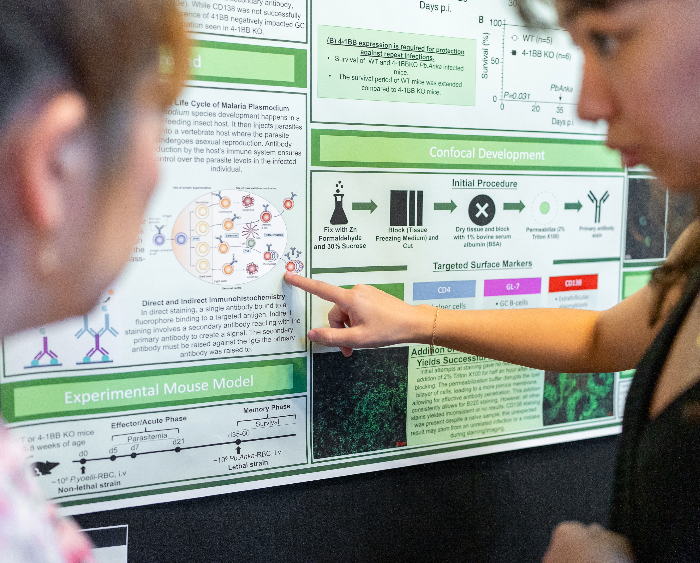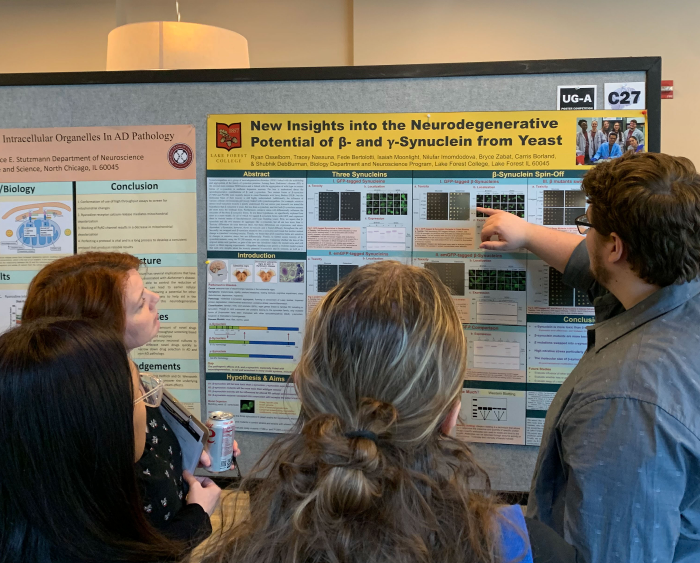


A distinguishing hallmark of the neuroscience major is that most students engage in undergraduate research beyond the classroom. These experiences can take place on or off campus, during the academic year or during the summer. They often culminate in symposium and conference presentations, as well as professional publications.
Neuroscience majors—especially those considering graduate or medical school—are strongly encouraged to pursue such research opportunities.
On Campus: Research Assistant
Several neuroscience program faculty at the college engage in biology, psychology and philosophical research that contribute to our understanding of the relationships between brain, mind, and behavior and welcome motivated students to pursue research in their labs.
Research assistants can work with faculty during the academic year as volunteers, as paid research assistants, or for course credit. They can also work in faculty labs during the summer as paid research assistants. Students gain first-hand experience with research design, data collection, analysis, and dissemination of research.
Interested students should read our individual research blurbs and contact individual faculty to discuss the potential to engage in a faculty-student collaborative research project.
On Campus: Richter Scholar
This college-wide program selects 45 first-year students to work with college faculty on independent research projects for ten-week period in the summer after their first year. Each year, some students complete Richter projects in neuroscience and these students sometimes continue to work with their faculty mentor throughout their undergraduate career.
Interested students can learn more about the Richter Scholar program here.
Off Campus: Rosalind Franklin School of Medicine
Students may be particularly interested in neuroscience research opportunities at Rosalind Franklin University of Medicine and Science (RFUMS), which is about 10 minutes north of our campus. Each summer, between 10-15 undergraduates (from rising sophomores to rising seniors) conduct 10-12 weeks of paid research as LFC-RFUMS summer fellows.
Interested students should click here to learn more about our unique LFC-RFUMS Summer Fellows program.
Off Campus: Chicago
Chicago is exceptionally rich with undergraduate research opportunities in neuroscience because of it internationally renowned medical centers. Past students have engaged in summer research in neuroscience at the medical schools linked to Northwestern University, University of Chicago, University of Illinois at Chicago, Rush Medical School, and Loyola University.
Interested students should contact the Career Advancement Center
Senior Theses
We encourage all neuroscience majors to consider pursuing senior thesis research. This is highly recommended for those who wish to pursue a graduate degree in neuroscience or are planning for medical school. Although occasionally this research is part of a faculty member’s research program, it is typically a student-generated research project. Students interested in senior theses start formulating research ideas in the spring of the junior year, find a faculty member who is willing to advise them on their project, and conduct the thesis research itself throughout the senior year.
Research Projects
Neuroscience students can conduct projects as research assistants at the college, Richter Scholars, LFC-RFUMS summer fellows, or as Groner Grant Foundation recipients.
November 17, 2023
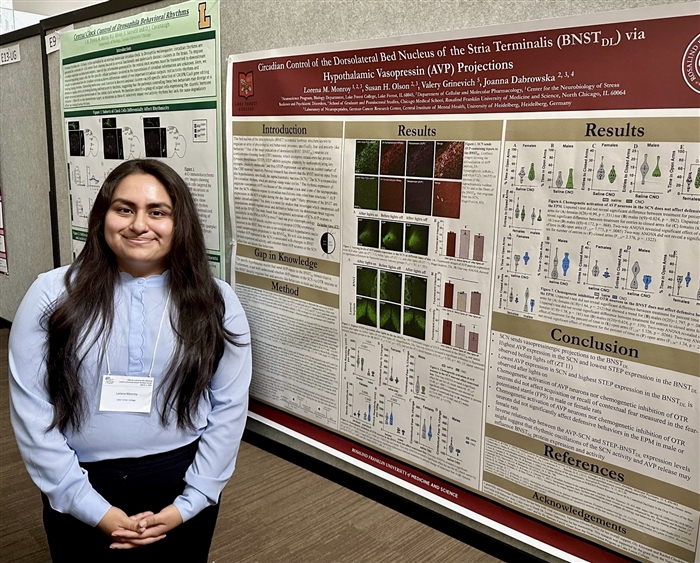
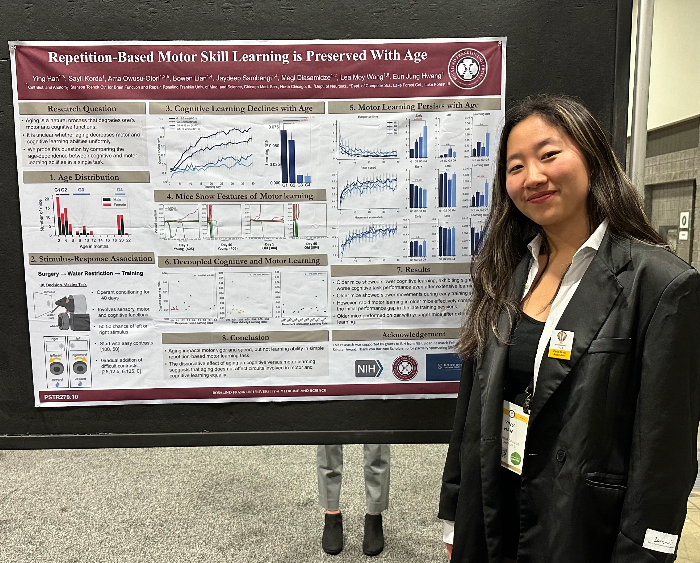
Neuroscience students present research in Washington DC